

The Zen of Visionary Poet and Artist William Blake, and Our Human Potential
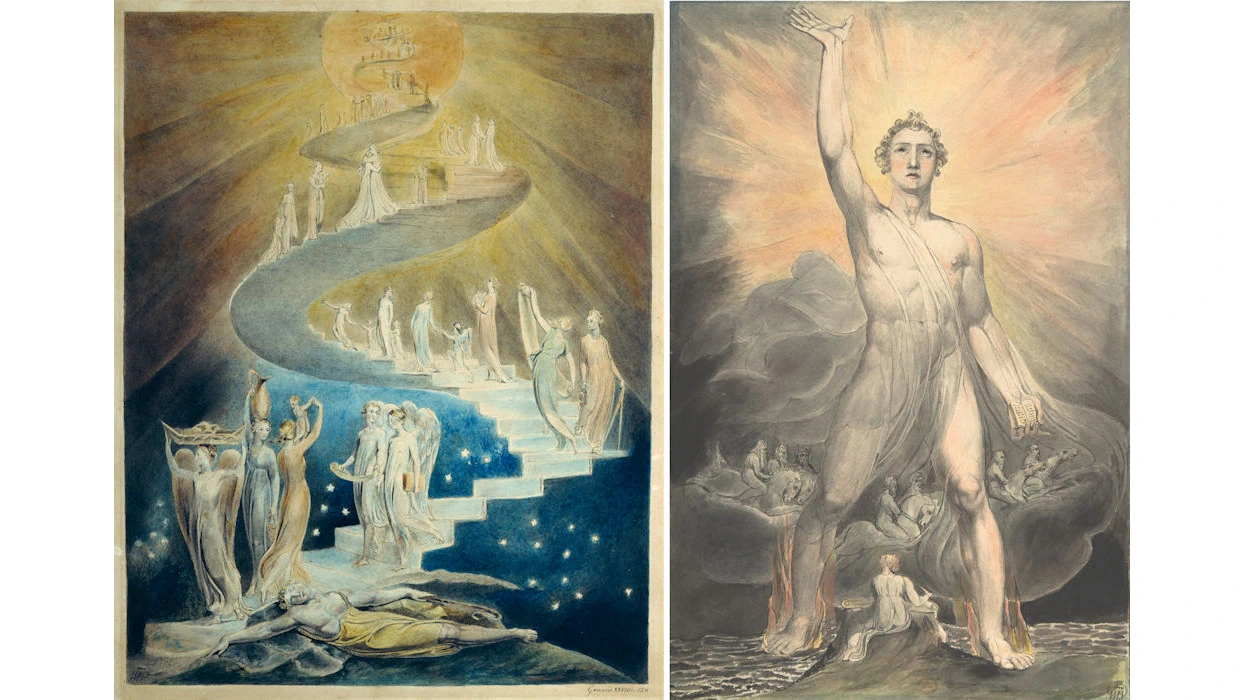
Saturday, December 12 · 11am – 1pm ET
There is a deep connection between William Blake's worldview and the worldview of Zen Buddhism. Our human experience of Truth does not belong to only one cultural heritage, geography, or time; it belongs to all human beings and it is our potential to discover that for ourselves.
Zen is concerned with finding the original, clear self and expressing our wholeness and energy in everyday life. There are many writings about how to find and live that original, clear self.
In his work, Blake portrayed the human being as ultimately what he called Albion, which represents the original human before our timeless fall from a fully healthy and integrated state of being.
Both Zen and the works of William Blake are pointing to the inner freedom and harmony that we each have in a fundamental way, but that we need to discover for ourselves.
More details
William Blake portrayed in striking and unique ways his understanding and experience of what our human nature is, and what our potential is. But why should we care about that?
What stands out is the deep connection between William Blake's worldview, and the worldview of Zen Buddhism. What this connection points out is that the truth does not belong to only one cultural heritage; it belongs to all human beings and is our potential to discover for ourselves.
Buddhism looks directly at that true self in all its expressions, and in many places Buddhism points out that its teaching is about understanding and living fully our human nature, and is not about a dogma.
About David
The teacher and facilitator, David B. Alexander, is a licensed psychotherapist. He studied William Blake's poetry and art while in high school in the late 1960s. Since then he has re-read and studied many of those poems and artworks, as well as biographies and analyses of Blake and his works. This has led to understanding the natural connection between Blake's expression and the intuitive understanding that is fundamental to Zen.
David has practiced Zen since 1970, with teachers at the New York Zen Center in the 1970s and 1980s, and most recently has been active at the Zen Mountain Monastery in Mt. Tremper, NY. He has been encouraged to offer public Zen talks by both Enkyo-Roshi (Pat O'Hara) of Village Zendo and Zen Master Wu Kwang (Richard Shrobe) of Chogye Zen Center.
In psychotherapy work, he uses gestalt therapy, psychoanalysis, existential therapy, and nonviolent communication to support individuals, couples, and leaders.
From David: I enjoy working as a therapist and coach with thoughtful individuals and couples from all walks of life. Psychotherapy sessions and leadership support are available online across New York State, and in person in Roslyn Heights, NY; leadership work is available for those living anywhere English is spoken. A free 15-minute consultation is available for those curious about working together. All inquiries are confidential.
For topics of communication, well-being, spiritual life, purpose, and success check this blog, or live online talks also on these topics. You can check out those resources, and sign up for the newsletter.